


Faculty Development Programme
Faculty Development Programme
Programme Objective
The Faculty Development Programme (FDP) on Elevating Academics with Generative AI: Teaching, Research, and Administration is designed to empower academic leaders and educators with the strategic knowledge and practical skills to seamlessly integrate Generative AI into higher-education workflows.
Designed as an immersive 5-day experience, the programme aims to enhance instructional design, elevate research rigor, streamline administrative responsibilities, and foster a culture of responsible AI governance across academic institutions.
- Enhance Instructional Design: Leverage AI to co-create syllabi, design engaging content, and foster personalized learning environments.
- Innovate Assessment Strategies: Redesign assessments to test higher-order thinking and implement AI-resilient evaluation frameworks.
- Accelerate Research Productivity: Utilise AI tools for literature reviews, synthesis, and structured academic writing without compromising research and publication ethics.
Target Audience
Recommended Profiles
- University and College Faculty Members.
- Department Heads, Curriculum Designers, and Doctoral Scholars [final stages of thesis].
- Institutional Leadership involved in academic policymaking.
Who Should Attend
Programme Suitability
This programme is tailored for higher education faculty, department heads, curriculum designers, researchers, and academic administrators who wish to modernize their pedagogical and operational practices by integrating GenAI.
Programme Details
Programme Content & Tools
Expected Learning Outcomes
The Faculty Development Programme on Generative AI delivers transformative outcomes for both individual educators and the wider institution by equipping participants with AI literacy, prompt engineering mastery, and workflow automation skills. Key deliverables include tangible pedagogical assets such as redesigned, AI-integrated course syllabi, AI-resilient assessment frameworks, and personalised research toolkits for literature synthesis. At the institutional level, the programme yields strategic roadmaps and academic integrity policy discussions, ensuring sustainable, ethical, and high-impact AI adoption across all departments.
Assessments
Live hands-on exercises and Capstone Project.
Programme Deliverables
- Each participant will receive reading material and the case studies as applicable.
- Upon successful completion of the programme, participants will receive a Certificate of Completion from IIM Kashipur.
Programme Fees
Important Dates
Admission Process
Fill out the online application form ().
Pay through UPI QR code or direct SBI bank account details provided below.
Email downloaded registration form & transaction slip (UTR No.) to the fdp[at]iimkashipur[dot]ac[dot]in.
UPI Payment
indian922@upi
Bank Details (NEFT / RTGS)
33809601691SBIN0017263Programme Faculty Profiles
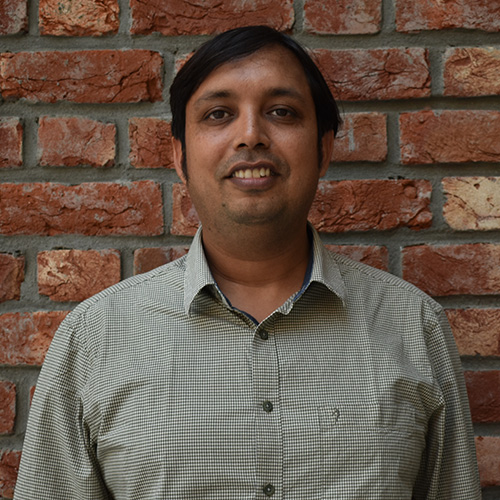
Prof. Mayank Sharma
Prof. Mayank Sharma is an Associate Professor in the Information Technology & Systems area at the Indian Institute of Management Kashipur. He holds a PhD in Information Systems from the Indian Institute of Management (IIM) Lucknow. His academic and professional work lies at the intersection of Information Systems, Analytics, Artificial Intelligence, and emerging digital technologies. His teaching and training areas include Generative AI, Prompt Engineering, AI & Business Analytics, Digital Transformation, and Social Media & Web Analytics. He also mentors a working group of the Institute of Actuaries of India, contributing to AI governance and professional education
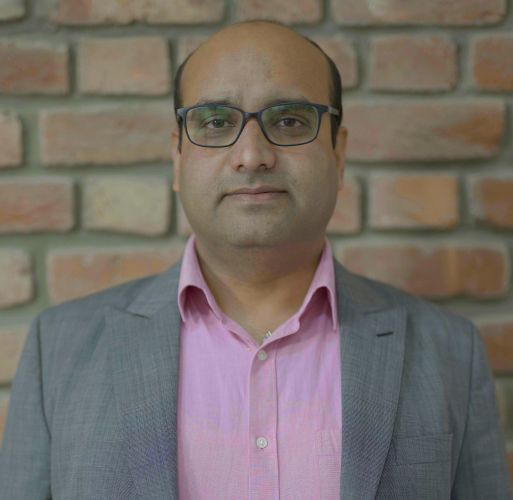
Prof. Rajiv Kumar
Prof. Rajiv Kumar is an Assistant Professor in the Information Technology & Systems area at the Indian Institute of Management Kashipur. He holds Ph.D. in Information Systems from Indian Institute of Management (IIM) Ranchi. He is M. Tech in media and sound engineering from Indian Institute of Technology (IIT) Kharagpur. He also has worked with Samsung India Software Operation Pvt. Ltd and Texas Instrument (India) Pvt. Ltd. He has teaching interest in MIS, Computational Tools for Business, Business Intelligence & Analytics, AI and Machine Learning, Business Research Methods, and Data Analytics Using R & Python. His research includes E-services, Machine Learning & Deep Learning, Impact of Artificial Intelligence, Dark Side of Digital Transformation, Technology and Society, and Diffusion of Innovation/Technology Adoption.

Prof. Harish Kumar
Prof. Harish Kumar is an Assistant Professor in the Information Technology & Systems area at the Indian Institute of Management Kashipur. He holds Ph.D. in Information Systems from Department of Management Studies, Indian Institute of Technology (IIT) Delhi, and M. Tech. from International Institute of Information Technology (IIIT) Hyderabad. His research and teaching areas include Artificial Intelligence, Metaverse, Visual Analytics, Digital Transformation and Data Visualization & BI reporting.

Prof. Ben Krishna
Prof. Ben Krishna is an Assistant Professor in the Information Technology & Systems area at the Indian Institute of Management Kashipur. He holds PhD in Information Systems from the Indian Institute of Management (IIM) Kozhikode, complemented by an MBA and an undergraduate degree in engineering a combination of technical, managerial, and research training. Before entering academia, he spent several years in the IT services industry in roles spanning software development and business analysis. His teaching includes MIS, E-Commerce, Information Security Governance, Generative AI and Prompt Engineering Strategy, and Data Science & Machine Learning. His research examines information security, security policy compliance, cyber hygiene, financial technology adoption and digital payment usage. He has been awarded with the Research for Impact (RFI) Fellowship hosted by J-PAL/CLEAR South Asia, recognising research oriented toward measurable social and policy outcomes.
Contact Details
Mr. Manoj Sharma
Manager, Executive Education and MDP
Indian Institute of Management Kashipur
Mobile: +91-8770573698 | Email: fdp[at]iimkashipur[dot]ac[dot]in
Ready to Elevate Academic Practice with Generative AI?
Limited to 30 participants. Register before 20 October 2026.
INFO

CONTACT
Indian Institute of Management Kashipur Kundeshwari, Kashipur-244713 Uttarakhand
Phone : +91-7088270882, 7900444090,91,92,93
Email : info[at]iimkashipur[dot]ac[dot]in